

Global Boat Trailers Market Projected to Reach USD 1.8 Billion by 2036 as Recreational Boating Surges
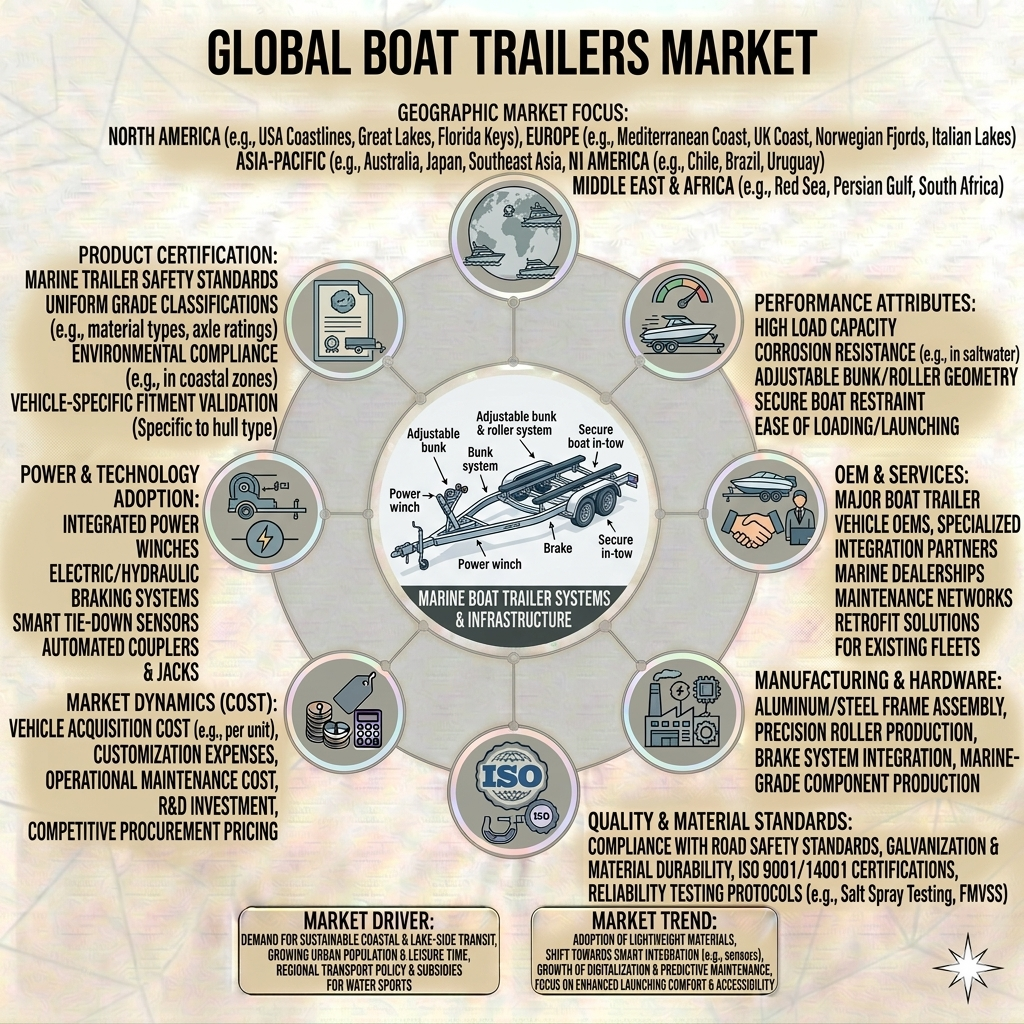
Boat Trailers Market Share
The global Boat Trailers market is set for steady expansion, with the industry expected to grow from USD 1.1 billion in 2026 to USD 1.8 billion by 2036.
NEWARK, DE, UNITED STATES, March 31, 2026 /EINPresswire.com/ -- The global maritime leisure landscape is undergoing a significant structural shift as more consumers seek the freedom of the open water. According to the latest 2026 strategic industry analysis, the Global Boat Trailers Market is valued at USD 1.1 billion in 2026 and is on a steady trajectory to reach USD 1.8 billion by 2036. This expansion represents a resilient Compound Annual Growth Rate (CAGR) of 4.3% over the next decade.
The growth of the industry is fundamentally anchored in the rising popularity of recreational boating, increasing global disposable incomes, and a revitalized interest in water sports and marine tourism. As boating activities expand beyond traditional strongholds into emerging coastal regions, the demand for durable, reliable, and technologically advanced transport solutions is prompting a new wave of innovation among global manufacturers.
The Material Revolution: Aluminum Takes the Helm
One of the most definitive trends shaping the 2026 market is the decisive shift toward premium materials. Aluminum Trailers are projected to account for approximately 52% of the total market share this year. This dominance is driven by the material's inherent resistance to corrosion—a critical factor for boaters operating in saltwater environments.
Beyond durability, aluminum offers a significant weight advantage over traditional galvanized steel. Lightweight construction translates directly to better fuel efficiency for towing vehicles and easier handling at boat ramps. While galvanized steel remains a staple for budget-conscious buyers in freshwater regions, the long-term cost benefits and reduced maintenance requirements of aluminum are making it the preferred choice for both serious anglers and luxury yacht owners.
Get Access of Report Sample:
https://www.futuremarketinsights.com/reports/sample/rep-gb-8069
Product Innovation: Bunk Trailers and High-Capacity Solutions
The market is segmented by various product types designed to cradle and protect diverse hull shapes. Bunk Trailers currently lead the industry, holding a 45% market share. Their popularity stems from their ability to provide stable, widespread hull support using carpeted timber or composite bunks, making them ideal for personal watercraft, fishing boats, and small family cruisers.
In terms of capacity, trailers designed for the 1,500 to 3,000 kg load range are seeing the highest adoption rates in 2026. This segment represents the "sweet spot" for the average recreational boater, accommodating most medium-sized center consoles and family runabouts. However, experts predict significant growth in the above 4,500 kg segment by 2036, as the trend toward larger, feature-rich "day boats" and weekenders necessitates heavy-duty trailers equipped with reinforced frames and advanced braking systems.
Regional Powerhouses: A Global Perspective on Growth
The desire for aquatic adventure is a global phenomenon, though regional dynamics vary based on infrastructure and boating culture:
• South Korea (4.5% CAGR): Leading the world in growth rate, South Korea’s market is thriving due to aggressive government investment in marine tourism and the development of new marinas in Jeju and Busan.
• United States (4.4% CAGR): The largest market by volume, the U.S. remains the industry's backbone. Boating hubs in Florida, Texas, and the Great Lakes are driving demand for high-tech trailers equipped with LED lighting, GPS security, and hydraulic disc brakes.
• Australia (4.3% CAGR): With one of the highest per-capita boat ownership rates in the world, Australia continues to see steady demand for rugged aluminum trailers capable of traversing long distances to reach remote coastal fishing spots.
• United Kingdom (4.2% CAGR): A strong maritime heritage and active sailing club networks support a stable market focused on certified, road-compliant trailers that meet stringent safety standards.
• Japan (4.1% CAGR): The Japanese market is characterized by a demand for precision-engineered, compact trailers that cater to the recreational fishing segment and small-scale leisure craft.
The Intelligence Age: Smart Trailers and IoT Integration
As we move toward 2030, the "dumb" trailer is becoming a thing of the past. Leading manufacturers are increasingly integrating Smart IoT-enabled features into their premium lines. These systems allow boaters to monitor tire pressure, brake heat, and load stability in real-time via smartphone apps.
Furthermore, the rise of electric vehicles (EVs) as towing platforms is pushing trailer designers to focus on aerodynamics and low-rolling-resistance tires to preserve EV range. Automation-assisted launching systems and self-centering rollers are also gaining traction, lowering the barrier to entry for novice boaters who may find the "ramp experience" intimidating.
Competitive Landscape: The Architects of Transport
The competitive arena is a mix of established titans and nimble, tech-focused challengers. Industry leaders such as Kropf Industrial Inc., HOSTAR Marine Transport Systems, and the TRIGANO Group maintain their dominance through massive distribution networks and decades of engineering expertise.
Meanwhile, brands like EZ Loader, TRACKER, and Load Rite are winning over enthusiasts with modular designs and customizable features. Specialist players like Balbi Rimorchi srl in Europe and Hydrotrans are carving out niches in the heavy-duty and commercial transport sectors, providing bespoke solutions for large yachts and professional marine operators.
Looking Toward 2036: A Sustainable Future
The long-term outlook for the Boat Trailers market remains bright. While challenges such as fluctuating raw material costs and stringent environmental regulations persist, the industry’s commitment to innovation is unwavering. The transition toward circular economy principles—including the use of recycled aluminum and eco-friendly bunk materials—will likely define the next decade of manufacturing.
As coastal and inland water infrastructure continues to improve globally, the boat trailer will remain an essential link in the recreational chain, transforming a stationary vessel into a mobile gateway for adventure.
Frequently Asked Questions (FAQ)
1. Why is aluminum preferred over galvanized steel for boat trailers?
Aluminum is naturally resistant to rust and corrosion, making it far superior for saltwater use. It is also significantly lighter, which reduces the strain on your towing vehicle and can improve fuel economy. While more expensive upfront, aluminum trailers typically have a higher resale value and require less maintenance over time.
2. What is the difference between a Bunk Trailer and a Roller Trailer?
Bunk trailers use long, felt-covered boards to support the hull. they are simple, reliable, and best for protecting the boat's finish. Roller trailers use a series of plastic or rubber wheels; they are generally easier to use at shallow ramps because the boat can "roll" off the trailer more easily, though they provide less surface area support for the hull.
3. How often should boat trailer bearings be serviced?
Because boat trailers are frequently submerged in water, bearings are highly susceptible to wear and corrosion. It is widely recommended to inspect and grease your bearings at least once a year, or every 2,000 to 3,000 miles. If you primarily launch in saltwater, more frequent checks are advisable.
4. Can I tow a 3,000 kg boat with a standard SUV?
It depends on your vehicle's specific towing capacity. Most mid-sized SUVs are rated for up to 2,200–2,500 kg. For a 3,000 kg boat and trailer combo, you typically need a full-sized SUV or a half-ton pickup truck equipped with a proper towing package and brake controller.
5. Are "Smart" features really necessary for a boat trailer?
While not "necessary" for basic function, smart features like tire pressure monitoring systems (TPMS) and integrated cameras can significantly increase safety. Given that many boating accidents happen on the road rather than the water, these technologies provide peace of mind during long-distance hauls.
Browse More Industry Reports :
Boat Wiring Harness Market
https://www.futuremarketinsights.com/reports/boat-wiring-harness-market
Boat Steering Wheels Market
https://www.futuremarketinsights.com/reports/boat-steering-wheels-market
Boat Trolling Motor Market
https://www.futuremarketinsights.com/reports/boat-trolling-motor-market
Sudip Saha
Future Market Insights Inc.
+1 347-918-3531
email us here
Legal Disclaimer:
EIN Presswire provides this news content "as is" without warranty of any kind. We do not accept any responsibility or liability for the accuracy, content, images, videos, licenses, completeness, legality, or reliability of the information contained in this article. If you have any complaints or copyright issues related to this article, kindly contact the author above.
